

Gelatin vs Agar-Agar vs Carrageenan
What Are Gelling Agents?
Gelling agents aid in the solidification of liquid food. They offer many items shape and texture.
What is Gelatin?
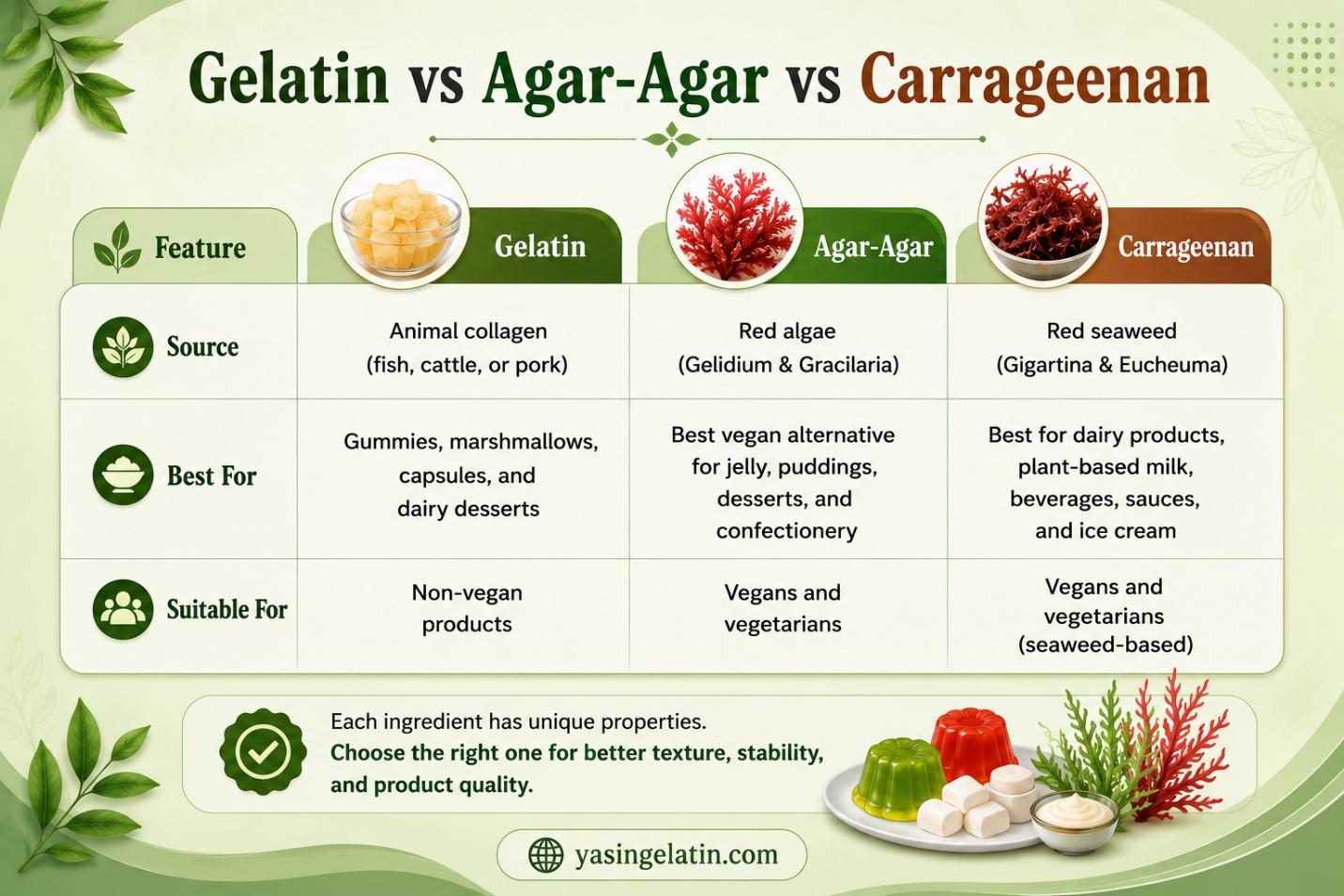
Animal collagen is the source of gelatin. It is derived from fish and cattle. It feels soft and melts readily.
What is Agar-Agar?
Red algae are the source of agar-agar. Gelidium and Gracilaria seaweed are the primary sources. It maintains its form and settles firmly.
What is Carrageenan?
Red seaweed is another source of carrageenan. It originates from the Gigartina and Eucheuma species. Depending on the kind, it produces gel, thickness, or stability.
Quick Comparison Table
Source — Gelatin: Animal collagen (pork, beef, fish); Agar-Agar: Red algae (Gelidium, Gracilaria); Carrageenan: Red seaweed (Eucheuma, Gigartina)
Vegan — Gelatin: No; Agar-Agar: Yes; Carrageenan: Yes
Halal — Gelatin: Only if certified; Agar-Agar: Yes; Carrageenan: Yes
Kosher — Gelatin: Only if certified; Agar-Agar: Yes; Carrageenan: Yes
Gel Strength — Gelatin: Moderate; Agar-Agar: Very high (~8x gelatin); Carrageenan: Low to moderate
Melting Point — Gelatin: Low (~35°C / 95°F); Agar-Agar: High (~85°C / 185°F); Carrageenan: Moderate to high (varies by type)
Setting Temperature — Gelatin: Needs refrigeration; Agar-Agar: Sets at room temperature; Carrageenan: Sets at room temperature
Texture — Gelatin: Soft, bouncy, elastic; Agar-Agar: Firm, brittle; Carrageenan: Soft, elastic to gel-like (varies by type)
Heat Stability — Gelatin: Low (melts easily); Agar-Agar: High (stays solid); Carrageenan: Moderate to high
Typical Applications — Gelatin: Gummies, marshmallows, panna cotta, mousses; Agar-Agar: Asian desserts, vegan jellies, fruit terrines; Carrageenan: Dairy products, plant-based milk, meat processing
Understanding the Key Differences Between Gelatin, Agar-Agar and Carrageenan
The source, texture, gel strength, and heat response of gelatin, agar-agar, and carrageenan are different.
Source:
Animals provide gelatin. Seaweed is the source of carrageenan and agar.
Texture:
Gelatin has a bouncy, soft feel. Agar has a hard, brittle sensation. Carrageenan has an elastic, silky texture.
Gel Strength
Agar is the strongest gel. It requires very little powder to set. Gelatin is a mild substance. Carrageenan is softer and lighter.
Clarity:
Clear, glossy gels are produced from gelatin. Agar seems a little hazy. The clarity of carrageenan varies by kind.
Taste:
The flavours of all three remain mostly unremarkable. They are thus simple to employ in a variety of recipes.
Solubility
Gelatin is soluble in warm water. Boiling water is necessary for the effective activation of agar and carrageenan.
Heat Stability
Agar is the most heat-resistant material. Even at room temperature, gelatin melts the quickest.
Melting Behavior:
In the mouth, gelatin melts easily. Even in warm conditions, agar and carrageenan maintain their firmness.
Shelf Life:
When stored dry and away from moisture, all three do well.
Processing:
Boiling is required for agar. Gelatin must first bloom in cold water. Carrageenan must be mixed carefully and evenly.
Functional Performance of Gelatin, Agar-Agar, and Carrageenan
Every gelling agent contributes special functional advantages to food preparation.
Water Binding
Gelatin has a strong ability to bind water. Even more water is bound by agar and carrageenan.
Thickening
Carrageenan effectively thickens liquids. Agar thickens well as well. Gelatin does not thicken as much.
Stabilization
Dairy products are best stabilized by carrageenan. Plant-based beverages are stabilized by agar. Foams and mousses are stabilized by gelatin.
Suspension
Particles in liquids are kept suspended by carrageenan. Plant milks and chocolate milk benefit from this.
Syneresis Resistance:
Over time, agar may leak water. Carrageenan is more resistant to this. Seldom does gelatin exhibit syneresis.
Freeze-Thaw Stability:
Gelatin is resistant to freezing and thawing. After freezing, agar may fracture. The stability of carrageenan is modest.
Choosing the Right Gelling Agent for Different Food Industry Applications
Every gelling agent has a distinct function in several food businesses.
Gummies:
The creation of gummies is dominated by gelatin. People like the soft, chewy, bouncy bite it provides. Additionally, it melts easily in the tongue.
Dairy:
Carrageenan is a major ingredient in dairy products. It keeps ice cream, yoghurt, and milk stable. It avoids separation and maintains a smooth texture.
Bakery:
Agar and gelatin aid in the setting of glazes and fillings. They provide cakes and pastries structure and lustre.
Meat Processing:
Carrageenan helps meat products retain more water. Additionally, it improves the texture of deli and processed meats.
From Confectionery to Nutraceuticals: Choosing the Right Gelling Solution
Confectionery:
The gummies are chewy because of the gelatin.
Beverage:
Smoothness of beverage carrageenan.
A Plant-Based Foods:
Gelatin may readily be replaced by carrageenan or agar.
Pharma Capsule:
The strong and dependable medical capsules are constructed of gelatin.
Nutraceutical Gummies:
These chewable vitamins have Agar-Agar Powder as the active ingredient. An alternate gelling ingredient, agar-agar powder is obtained from red algae. It is extracted from seaweeds like Gracilaria and Gelidium. It seems to be a thin white powder. Manufacturers boil it in water before use. It dissolves exclusively in hot solutions, not in cold. Once chilled, it sets rapidly.
Commercial grades:
There are a number of grades and strengths of agar available. The food-grade agar meets strict purity criteria. Some grades are superior in thickening, some in gel formation.
Varied grades have varied strengths. It is used in food processing applications such as vegan gummies, jellies and sweets.
Works great as a dairy substitute or a glaze for pastries. Carrageenan powder, made from seaweed, is used as a stabilizer and gelling agent in food.
Refined carrageenan is substantially more transparent and purer than semi-refined carrageenan. Partially refined carrageenan is less costly and seems cloudier.
Food Applications
This helps to stabilize dairy products such as ice cream and yogurt. It is also used as a thickener for plant-based milks, soups and sauces.
Industrial use
Carrageenan helps meat hold water during processing. It is used in the manufacture of pet food, toothpaste, and cosmetics.
Can agar replace Gelatin as a substitute?
Agar can be used as a replacement for gelatin in certain recipes but not in all.
Conversion rate
As for the conversion ratio, it is roughly 2 parts gelatin to 1 part agar. The ratios vary by brand and shape.
Texture Variations
Agar becomes hard and brittle. Gelatin keeps elasticity, suppleness, and bounce.
Processing Differences
Agar must be boiled to be active. Gelatin does not need to be boiled. Just warm water.
Performance Applications
Agar, unlike gelatin, does not dissolve in the mouth. Therefore, it is not suitable for huge gummies and marshmallows.
Carrageenan vs Gelatin
Source — Carrageenan: Red seaweed; Gelatin: Animal collagen
Best For — Carrageenan: Dairy & beverages; Gelatin: Gummies & confectionery
Texture — Carrageenan: Smooth, soft; Gelatin: Chewy, elastic
Stability — Carrageenan: Prevents separation; Gelatin: Stabilizes creams & mousses
Vegan — Carrageenan: ✔ Yes; Gelatin: ✘ No
Halal — Carrageenan: Naturally halal; Gelatin: Certification required
Kosher — Carrageenan: Naturally suitable; Gelatin: Certification required
Cost — Carrageenan: More economical; Gelatin: Higher cost
Carrageenan and Gelatin are utilized in a wide range of uses, especially in dairy and protein products.
Dairy:
Carrageenan is used to stabilize milk and dairy products. Gelatin is not the greatest way to stabilize dairy.
Gummies:
Gummies are chewy and bouncy because of gelatin. Carrageenan gives a softer, less elastic bite.
Proteins Systems:
Gelatin is compatible with foams, too, as well as proteins. It is more effective than carrageenan in liquid-based systems.
Stabilization:
Carrageenan does not separate drinks and dairy. Gelatin, on the other hand, stabilizes creams and mousses.
Price:
In general, carrageenan is less costly than gelatin.
Texture:
Gelatin feels stretchy and squishy. Carrageenan is less bouncy yet smoother.
Health & Diet Considerations
Dietary needs play a strong role in the choice of the proper gelling agent.
Vegan:
Carrageenan and agar are vegan. Gelatin is not.
Vegetarian:
The regulation is the same. Only carrageenan and agar are okay.
Halal:
Carrageenan and agar are naturally halal. The gelatin has to have a halal certificate.
Kosher:
Same goes for kosher. But gelatin does, whereas the others don’t need certification.
Allergens:
Gelatin may elicit allergies from animals. Carrageenan and agar are generally safe for allergies.
Digestibility:
Gelatin is easily digested and is good for the intestines. Carrageenan and agar digest more slowly.
How to Choose the Right Gelling Agent
There are several critical production parameters that affect the choice of gelling agent.
Type of Product:
Varied products need varied textures and gel strengths.
Manufacturing Process
Some agents need to be cold-bloomed, others boiled.
Temperature:
Stability under Heat or Refrigeration. Select between hard, brittle, bouncy or soft textures.
Texture:
Know if you require halal, kosher, or vegan certification.
Cost:
Take the price of carrageenan,
Label Claims:
Match ingredient choices to “clean label” or “vegan” marketing claims
Why Manufacturers choose Yasingelatin
Yasingelatin supplies manufacturers with reliable ingredients and sound technology.
Bulk Supply:
Bulk gelling agents for high-volume production.
OEM Services:
Our company provides a specialized OEM for private-label products.
Bulk Ingredients:
They provide substantial quantities of carrageenan, agar, and gelatin.
Global Export:
Yasingelatin supplies its products to companies all around the world.
Quality Assurance:
All batches are assured to include consistent, excellent ingredient testing.
Technical Support:
Their staff helps producers pick and use the right ingredient.
Certifications:
Goods are Halal and Kosher compliant. This is 100 words with the header.
Conclusion.
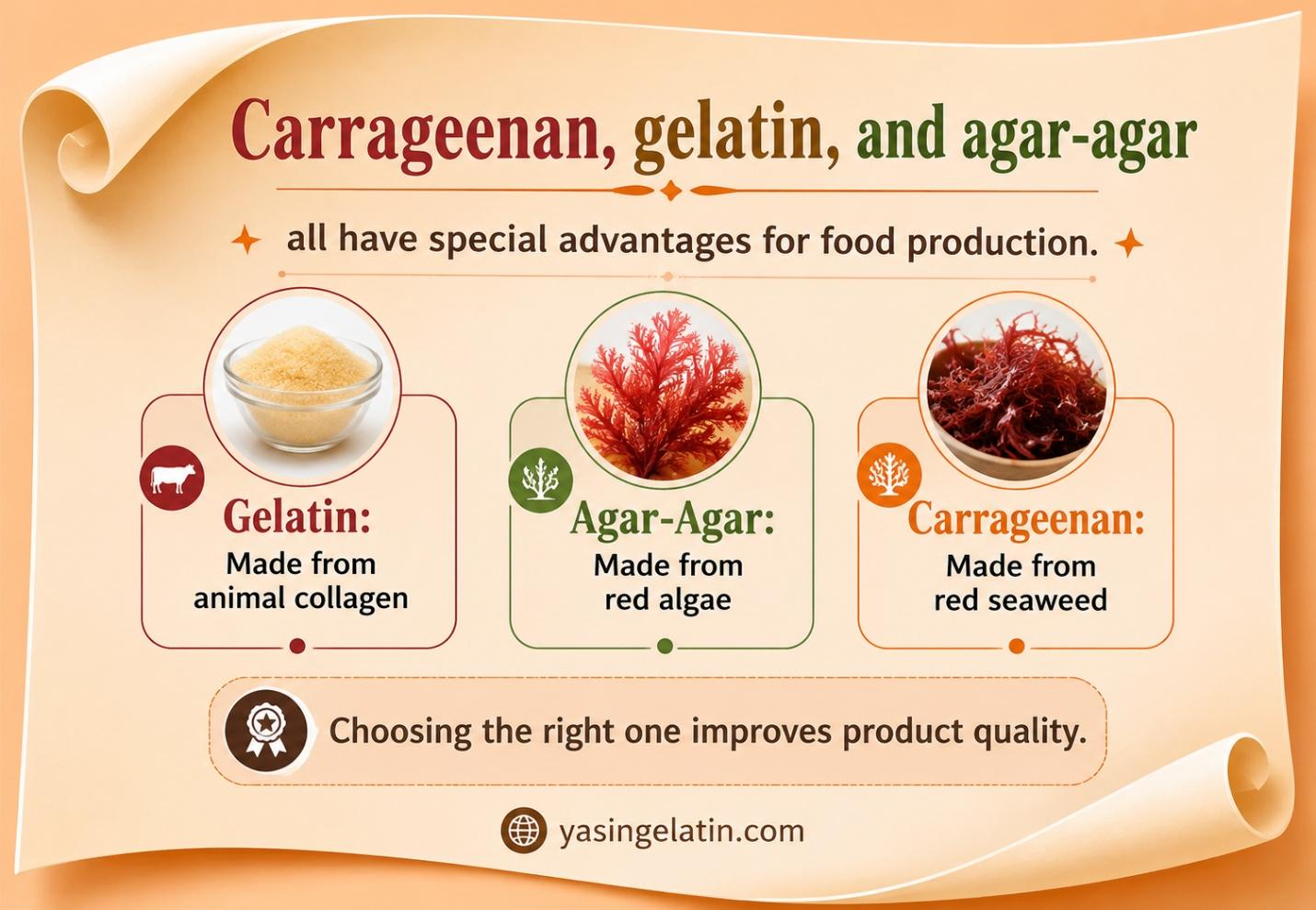
Carrageenan, gelatin, and agar-agar each have their own unique benefits for use in food manufacture. Texture, cost and dietary needs all best one. Yasin gelatin helps companies select and get the right gelling agent, ensuring dependable and high-quality production results.
FAQs
What is the difference between agar-agar and gelatin?
Agar-agar is a gelatinous product derived from seaweed, while gelatin is derived from collagen from animals.
Can agar-agar replace gelatin?
Gelatin is animal-based. Agar is derived from seaweed.
Can I use agar-agar instead of gelatin?
Yes, plenty of recipes use it. Texture and Process will be a little different.
Is agar stronger than gelatin?
Indeed, agar is almost eight times stronger by weight.
Which is better for gummies?
Gelatin is best. It gives the bouncy, chewy, velvety bite.
Yasin Gelatin
Yasin Gelatin
+ +86-18698344931
info@yasingelatin.com
Legal Disclaimer:
EIN Presswire provides this news content "as is" without warranty of any kind. We do not accept any responsibility or liability for the accuracy, content, images, videos, licenses, completeness, legality, or reliability of the information contained in this article. If you have any complaints or copyright issues related to this article, kindly contact the author above.
