

Market Analysis: How a Professional Jello Shots Manufacturer Captures the European Youth Segment
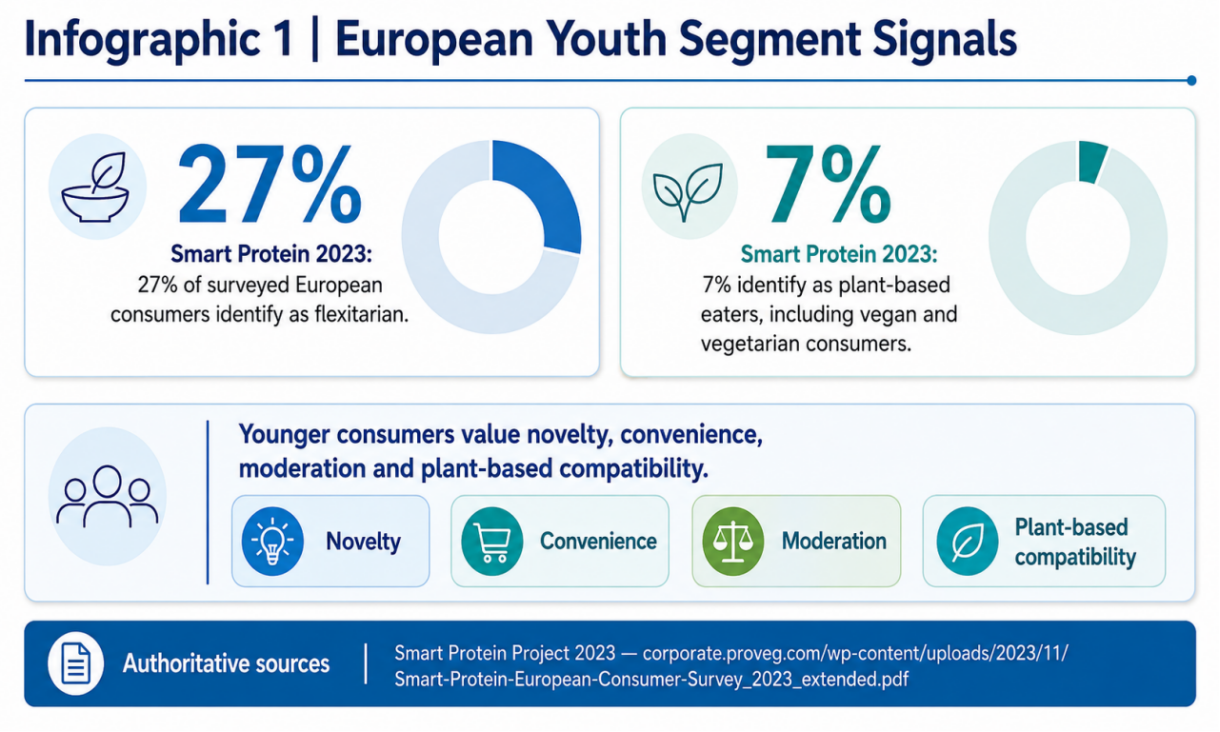
Today’s young adults—predominantly Gen Z and Millennials—are increasingly pivoting away from traditional, heavy alcoholic beverages in favor of novel, flavor-forward, and lower-alcohol alternatives that blend entertainment with socialization. In this changing landscape, pre-packaged alcoholic jelly products have emerged as a high-growth segment. Capturing this discerning market requires a sophisticated balance of food science, compliance with international safety benchmarks, and creative packaging design. To establish a sustainable footprint, international brands rely heavily on a Professional Jello Shots Manufacturer capable of delivering consistent texturizing properties, precise alcohol-by-volume (ABV) control, and compelling sensory profiles tailored specifically to European tastes.
The modern European youth segment values convenience and novelty without compromising on product substance. Traditional social settings, from casual pre-drinking gatherings to music festivals and nightlife events across major European metropolitan centers, demand formats that eliminate the need for complicated mixing, glassware, or open containers. Ready-to-drink (RTD) alternatives have capitalized on this trend, but alcoholic jelly cubes and shots represent the ultimate convergence of the confectionery and beverage sectors. By transforming a liquid cocktail into a cohesive, solid gel matrix, manufacturers give consumers a playful yet sophisticated way to experience premium spirits. This shift is closely aligned with the broader trend of premiumization, where young buyers look for high-quality ingredients, natural fruit extracts, and distinct flavor variety rather than mass-market options.
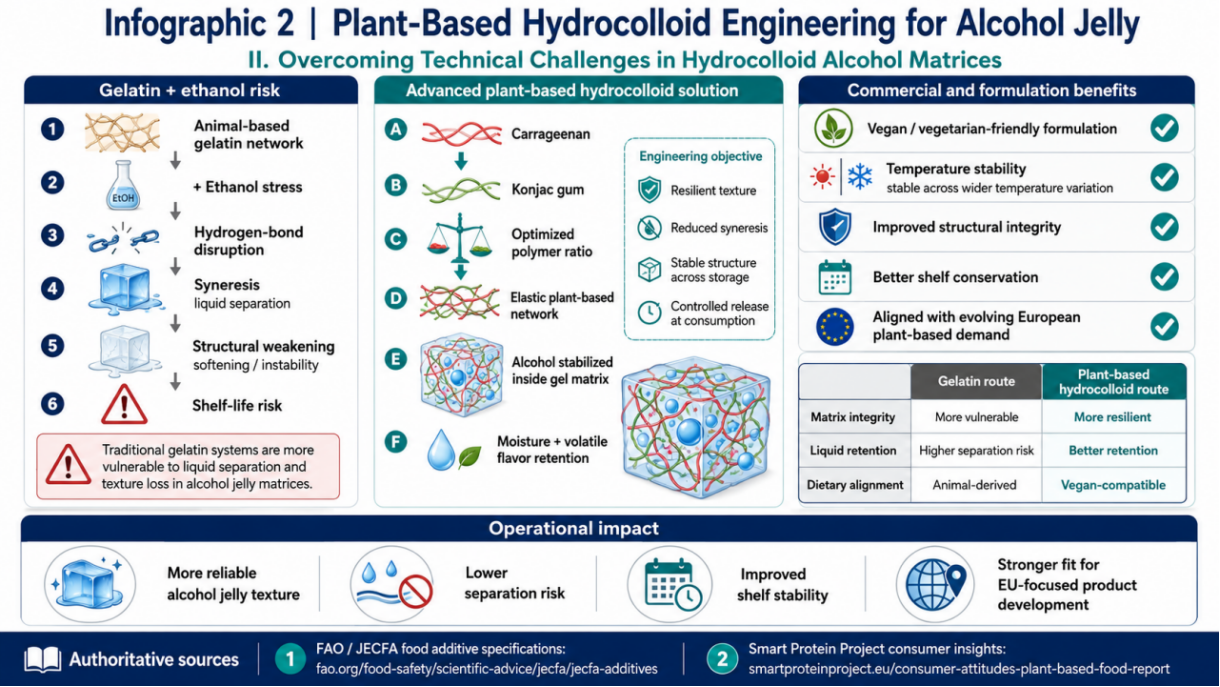
II. Overcoming Technical Challenges in Hydrocolloid Alcohol Matrices
Formulating an optimal pre-made beverage jelly presents significant food engineering challenges, particularly regarding texturizing stability and long-term shelf conservation. Traditional gelatin-based formulations, which rely on animal-derived collagen, suffer from a structural vulnerability known as syneresis—the spontaneous separation of liquid from the gel matrix over time. This issue is compounded when high concentrations of ethanol are present, as alcohol disrupts the hydrogen bonding network required to maintain a solid gel structure.
To address these technical limitations, advanced manufacturing facilities utilize plant-based hydrocolloids, such as carrageenan and konjac gum, to engineer an elastic, resilient macromolecular network. This vegetable-derived formulation not only ensures structural integrity across wide temperature variations but also inherently complies with the rapidly growing European demand for vegan and vegetarian-friendly products. By optimizing the ratio of hydrophilic polymers, a professional manufacturer stabilizes the alcohol within the matrix, ensuring that the moisture and volatile flavor compounds remain sealed until consumption.
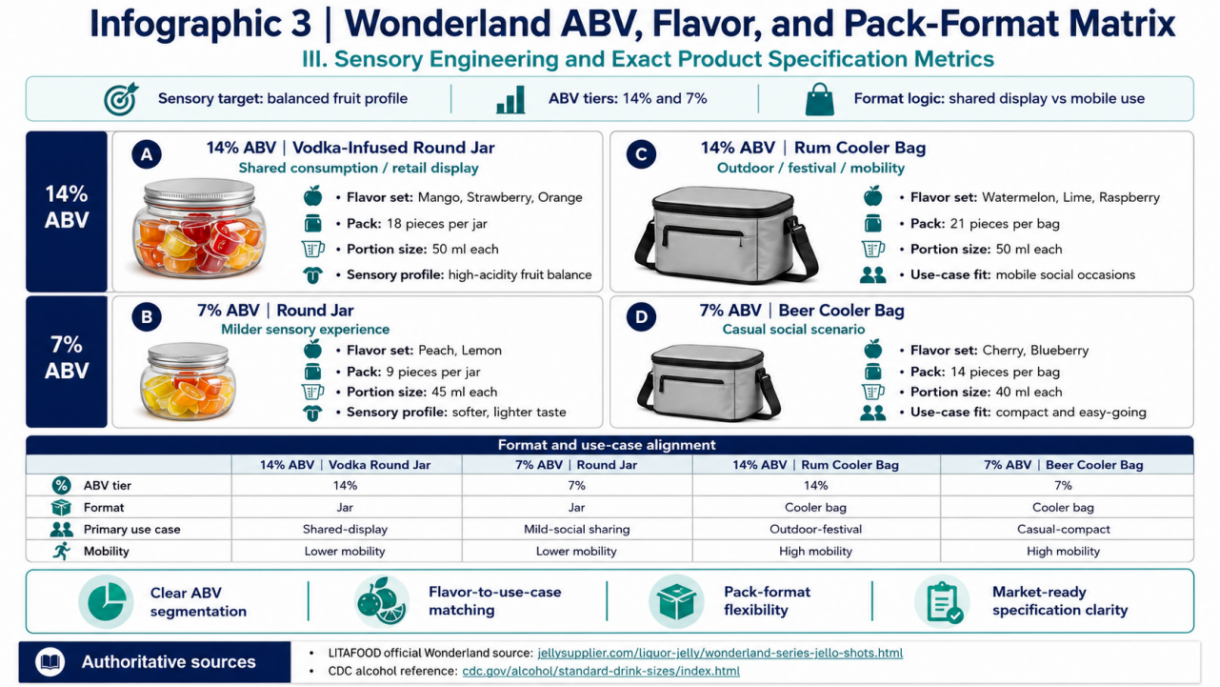
III. Sensory Engineering and Exact Product Specification Metrics
A key element in capturing European market share is the exact alignment of product lines with local sensory preferences. European youth consumers often favor balanced, clean flavor notes that soften the harshness of ethanol while retaining a distinct fruit profile. To demonstrate how technical data translates into market-ready applications, the Wonderland Series developed by LITAFOOD serves as an industry case study highlighting structural variety and specification matching:
Vodka-Infused Round Jar Formats: Designed for shared consumption or commercial retail display, these options feature a robust 14% ABV matrix balanced with high-acidity fruit profiles including Mango, Strawberry, and Orange, packaged in large round jars containing 18 pieces of 50ml portions. For a milder sensory experience, a smaller 7% ABV version utilizes delicate Peach and Lemon flavors, distributed in 9 pieces of 45ml portions per jar.
Flexible Cooler Bag Distributions: Engineered for outdoor environments, festivals, and mobility, the large cooler bag variant delivers a 14% ABV Rum-infused profile featuring Watermelon, Lime, and Raspberry flavors in a 21-piece, 50ml specification. Alternatively, a lower 7% ABV Beer-infused option targets casual social scenarios, blending Cherry and Blueberry profiles into a compact 14-piece, 40ml bag layout.
Premium Gift Box and Curated Bag Layouts: To address the premium gifting market, dedicated Tequila-infused gift boxes integrate a 7% ABV level with high-demand Strawberry and Blueberry notes in an exact 6-piece, 70ml per box configuration. This is complemented by an elegant Whisky-based gift bag variant that balances a 7% ABV with Passion Fruit and Lime notes across a 6-piece, 50ml distribution.
IV. Versatility in Consumer Applications and Cross-Industry Integration
The market potential of pre-packaged alcoholic jellies extends beyond direct consumption. Modern food service providers, event planning agencies, and mixologists across Europe are increasingly using ready-made jelly shots as components in broader beverage programs. These colorful jelly portions can be integrated into cocktail shakers to add distinct layers of texture and visual appeal to standard drinks.
Additionally, when floating in carbonated mixers such as lemon-lime soda, tonic water, or sparkling wine, the optimized density of the gel allows it to remain suspended, creating a visually striking effect under event lighting. This versatility expands the product's market reach from casual retail purchases to B2B hospitality, nightlife entertainment, and festive event catering, supporting demand throughout the year.
In summary, capturing the European youth consumer segment requires an innovative approach that combines food science, market-focused product development, and industrial manufacturing excellence. By replacing traditional animal-based gelatin with high-performance plant-based hydrocolloids and offering varied, strictly controlled ABV specifications, advanced manufacturers help brands compete in this high-potential market. As global supply networks continue to integrate, companies that combine advanced formulations with certified global manufacturing standards are well positioned to lead within the premium beverage and confectionery sector.
For more information regarding advanced food manufacturing capabilities and product catalogs, please visit the official company platform at https://www.jellysupplier.com/.
Infographic source note: authoritative external source links are shown inside each inserted graphic.
Nantong Litai Jianlong Food Co., Ltd.
Nantong Litai Jianlong Food Co., Ltd.
810-064-1739
email us here
Legal Disclaimer:
EIN Presswire provides this news content "as is" without warranty of any kind. We do not accept any responsibility or liability for the accuracy, content, images, videos, licenses, completeness, legality, or reliability of the information contained in this article. If you have any complaints or copyright issues related to this article, kindly contact the author above.
