Step-by-Step Guide: Launching Products with a Certified Collagen Jelly Factory Like LITAFOOD
NANTONG, CHINA, July 9, 2026 /EINPresswire.com/ -- Collagen jelly has emerged as a frontrunner in the nutraceutical space, bridging the gap between traditional dietary supplements and confectionery. For private label owners, beauty brands, and wellness entrepreneurs looking to capitalize on this trend, introducing a proprietary product line presents a highly lucrative opportunity. However, transitioning from a conceptual formula to a shelf-ready market success requires navigating complex manufacturing landscapes. Navigating formulation stability, structural integrity, regulatory compliance, and large-scale industrialization can be daunting without a structured approach. Partnering with a specialized manufacturer is critical to overcoming these hurdles. For a comprehensive overview of specialized production capacities or to initiate an inquiry, brands can directly connect with an industry leader through the Certified Collagen Jelly Factory contact channel.
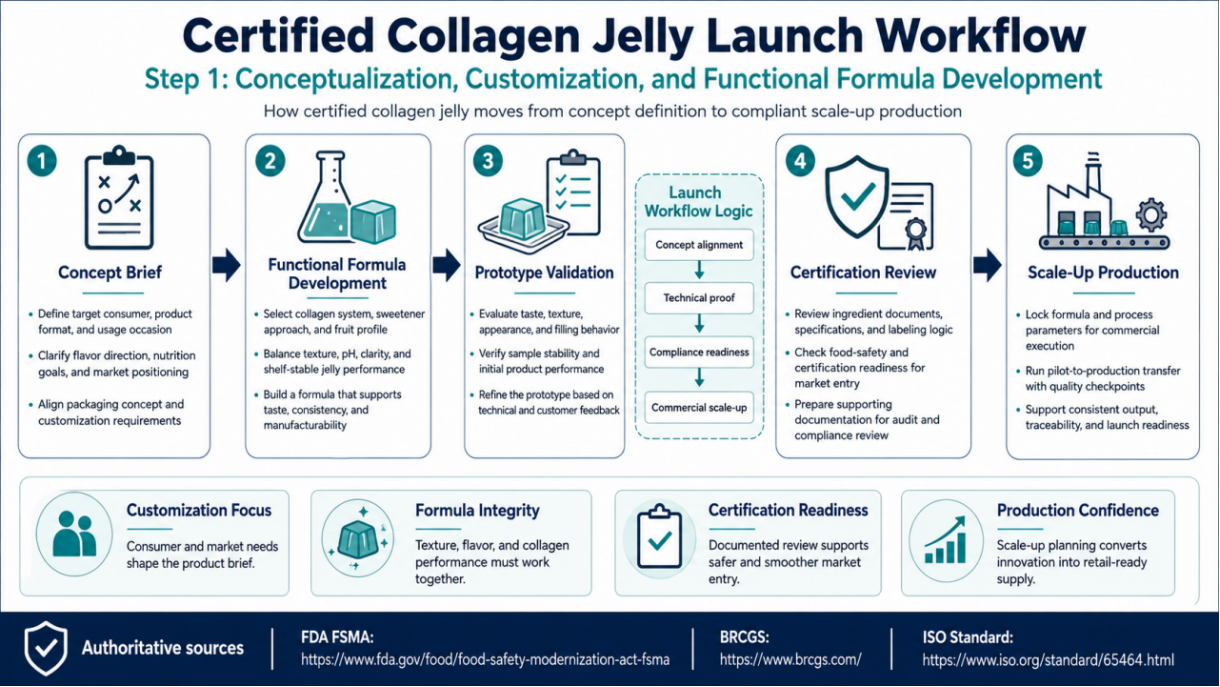
Step 1: Conceptualization, Customization, and Functional Formula Development
The journey of launching a successful product line begins with comprehensive conceptualization and precise formulation adjustments. Private-label clients must define their target demographic, desired health benefits, and flavor profiles. In the functional nutraceutical confectionery segment, success depends on the seamless integration of therapeutic efficacy and premium sensory characteristics. This phase requires balancing functional active ingredients with a stable hydrocolloid matrix that preserves the stability of the active components throughout their shelf life.
During formulation development, specialized original design manufacturing (ODM) services become invaluable. Reputable manufacturers provide comprehensive chemical and sensory development, optimizing parameters such as water activity, pH levels, and hydrocolloid ratios to ensure the matrix effectively encapsulates the active ingredients. For instance, incorporating a potent dose of hydrolyzed collagen peptides often introduces challenging bitter notes and altering gelling behavior. Advanced ODM partners resolve these challenges by employing advanced flavor-masking technologies and modifying matrix structures to maintain perfect gel elasticity and flavor release. This ensures that the final product delivers its health benefits while providing a premium, enjoyable consumer experience.
Step 2: Prototyping, Technical Parameter Alignment, and Technical Specifications
Once the initial formulation is established, the process advances to rigorous prototyping and precise alignment of technical parameters. This step transitions lab-scale concepts into viable industrial formulas. This phase involves establishing strict technical specifications that define the physical, chemical, and nutritional attributes of the functional product, ensuring consistency across all subsequent production runs.
Technical parameters must be meticulously quantified and validated through pilot testing. Key specifications include precise gel strength, texture profiles, moisture content, and active ingredient recovery rates post-thermal processing. Private-label clients can reference established industry standards, such as the comprehensive technical frameworks utilized for high-tier products on the collagen jelly. This phase also evaluates how active compounds react to thermal processing. Because collagen peptides and vitamins can be sensitive to heat, the manufacturing process must utilize precise pasteurization or sterilization temperatures that eliminate microbiological risks without degrading the functional benefits of the formulation.
Step 3: Navigating International Certification and Strict Regulatory Compliance
Entering international markets requires strict adherence to global food safety standards and regulatory compliance. For private label brands distributed across diverse jurisdictions, partnering with a certified facility is not merely an operational advantage; it is a strict requirement for border clearance and retail placement. The factory must possess a comprehensive portfolio of international certifications to guarantee product safety and manufacturing excellence.
A truly qualified manufacturing facility must operate under globally recognized quality management systems. These include Hazard Analysis Critical Control Point (HACCP) and ISO 22000 certifications, which ensure systematic monitoring of critical control points throughout the production cycle. For premium markets and multinational retail compliance, advanced certifications such as BRCGS (British Retail Consortium Global Standard) or IFS Food are highly sought after. These frameworks verify that every aspect of production—from raw material traceability to allergen control and environmental monitoring—adheres to the highest international safety standards, protecting the brand from liabilities and building long-term consumer trust.
Step 4: Scale-Up Production and Utilizing Advanced Manufacturing Capabilities
With formulas validated and compliance secured, the product enters the scale-up and mass production phase. Transitioning from pilot batches to large-scale industrial output requires highly automated infrastructure capable of maintaining precise manufacturing conditions. At this stage, the choice of manufacturing partner directly influences production throughput, cost efficiency, and batch-to-batch consistency.
Modern production facilities utilize specialized continuous cooking and depositing lines designed specifically for functional hydrocolloid matrices. This advanced machinery ensures uniform distribution of active nutrients throughout the gel, preventing sedimentation or uneven dosing across individual units. Automated packaging systems operating under controlled atmospheric conditions are equally vital. These systems protect the sensitive collagen jelly from moisture absorption and oxidative degradation. Leveraging these advanced manufacturing capabilities allows brands to optimize unit economics, mitigate production defects, and scale operations rapidly to meet fluctuating market demands.
Strategic Sourcing: Partnering with Industry Pioneers Like LITAFOOD
Successfully executing this step-by-step development process requires an industrial partner that blends technical expertise with scalable manufacturing capacity. LITAFOOD exemplifies this ideal partner, bringing over two decades of specialized expertise in food technology and advanced manufacturing. Known as an industry pioneer, the company has consistently led the market by combining innovative manufacturing methods with high-quality original equipment manufacturer (OEM) and ODM customization services. This unique combination allows private-label clients to accelerate their product launch timelines while maintaining competitive pricing.
The manufacturing infrastructure at the facility is built on rigorous international standards, holding multiple global certifications that guarantee compliance across major international markets. This operational excellence has enabled the company to build long-term commercial partnerships with global retail giants, including Walmart and Costco. By maintaining a deep commitment to technical innovation, rigorous quality control, and scalable production, the company continues to advance the functional confectionery sector. This dedication ensures that global brands receive premium, consumer-preferred functional products that succeed in a competitive marketplace.
In conclusion, launching a proprietary functional line requires a systematic approach that balances scientific formulation, rigorous compliance, and advanced industrial capabilities. By following a structured development path and partnering with an established, certified manufacturing expert, brands can efficiently navigate development complexities, minimize market risks, and establish a strong presence in the rapidly growing global wellness economy.
For more technical details, product catalogs, or custom formulation inquiries, please visit the official corporate portal at https://www.jellysupplier.com/
Step 1: Conceptualization, Customization, and Functional Formula Development
The journey of launching a successful product line begins with comprehensive conceptualization and precise formulation adjustments. Private-label clients must define their target demographic, desired health benefits, and flavor profiles. In the functional nutraceutical confectionery segment, success depends on the seamless integration of therapeutic efficacy and premium sensory characteristics. This phase requires balancing functional active ingredients with a stable hydrocolloid matrix that preserves the stability of the active components throughout their shelf life.
During formulation development, specialized original design manufacturing (ODM) services become invaluable. Reputable manufacturers provide comprehensive chemical and sensory development, optimizing parameters such as water activity, pH levels, and hydrocolloid ratios to ensure the matrix effectively encapsulates the active ingredients. For instance, incorporating a potent dose of hydrolyzed collagen peptides often introduces challenging bitter notes and altering gelling behavior. Advanced ODM partners resolve these challenges by employing advanced flavor-masking technologies and modifying matrix structures to maintain perfect gel elasticity and flavor release. This ensures that the final product delivers its health benefits while providing a premium, enjoyable consumer experience.
Step 2: Prototyping, Technical Parameter Alignment, and Technical Specifications
Once the initial formulation is established, the process advances to rigorous prototyping and precise alignment of technical parameters. This step transitions lab-scale concepts into viable industrial formulas. This phase involves establishing strict technical specifications that define the physical, chemical, and nutritional attributes of the functional product, ensuring consistency across all subsequent production runs.
Technical parameters must be meticulously quantified and validated through pilot testing. Key specifications include precise gel strength, texture profiles, moisture content, and active ingredient recovery rates post-thermal processing. Private-label clients can reference established industry standards, such as the comprehensive technical frameworks utilized for high-tier products on the collagen jelly. This phase also evaluates how active compounds react to thermal processing. Because collagen peptides and vitamins can be sensitive to heat, the manufacturing process must utilize precise pasteurization or sterilization temperatures that eliminate microbiological risks without degrading the functional benefits of the formulation.
Step 3: Navigating International Certification and Strict Regulatory Compliance
Entering international markets requires strict adherence to global food safety standards and regulatory compliance. For private label brands distributed across diverse jurisdictions, partnering with a certified facility is not merely an operational advantage; it is a strict requirement for border clearance and retail placement. The factory must possess a comprehensive portfolio of international certifications to guarantee product safety and manufacturing excellence.
A truly qualified manufacturing facility must operate under globally recognized quality management systems. These include Hazard Analysis Critical Control Point (HACCP) and ISO 22000 certifications, which ensure systematic monitoring of critical control points throughout the production cycle. For premium markets and multinational retail compliance, advanced certifications such as BRCGS (British Retail Consortium Global Standard) or IFS Food are highly sought after. These frameworks verify that every aspect of production—from raw material traceability to allergen control and environmental monitoring—adheres to the highest international safety standards, protecting the brand from liabilities and building long-term consumer trust.
Step 4: Scale-Up Production and Utilizing Advanced Manufacturing Capabilities
With formulas validated and compliance secured, the product enters the scale-up and mass production phase. Transitioning from pilot batches to large-scale industrial output requires highly automated infrastructure capable of maintaining precise manufacturing conditions. At this stage, the choice of manufacturing partner directly influences production throughput, cost efficiency, and batch-to-batch consistency.
Modern production facilities utilize specialized continuous cooking and depositing lines designed specifically for functional hydrocolloid matrices. This advanced machinery ensures uniform distribution of active nutrients throughout the gel, preventing sedimentation or uneven dosing across individual units. Automated packaging systems operating under controlled atmospheric conditions are equally vital. These systems protect the sensitive collagen jelly from moisture absorption and oxidative degradation. Leveraging these advanced manufacturing capabilities allows brands to optimize unit economics, mitigate production defects, and scale operations rapidly to meet fluctuating market demands.
Strategic Sourcing: Partnering with Industry Pioneers Like LITAFOOD
Successfully executing this step-by-step development process requires an industrial partner that blends technical expertise with scalable manufacturing capacity. LITAFOOD exemplifies this ideal partner, bringing over two decades of specialized expertise in food technology and advanced manufacturing. Known as an industry pioneer, the company has consistently led the market by combining innovative manufacturing methods with high-quality original equipment manufacturer (OEM) and ODM customization services. This unique combination allows private-label clients to accelerate their product launch timelines while maintaining competitive pricing.
The manufacturing infrastructure at the facility is built on rigorous international standards, holding multiple global certifications that guarantee compliance across major international markets. This operational excellence has enabled the company to build long-term commercial partnerships with global retail giants, including Walmart and Costco. By maintaining a deep commitment to technical innovation, rigorous quality control, and scalable production, the company continues to advance the functional confectionery sector. This dedication ensures that global brands receive premium, consumer-preferred functional products that succeed in a competitive marketplace.
In conclusion, launching a proprietary functional line requires a systematic approach that balances scientific formulation, rigorous compliance, and advanced industrial capabilities. By following a structured development path and partnering with an established, certified manufacturing expert, brands can efficiently navigate development complexities, minimize market risks, and establish a strong presence in the rapidly growing global wellness economy.
For more technical details, product catalogs, or custom formulation inquiries, please visit the official corporate portal at https://www.jellysupplier.com/
Nantong Litai Jianlong Food Co., Ltd.
email us here
Legal Disclaimer:
EIN Presswire provides this news content "as is" without warranty of any kind. We do not accept any responsibility or liability for the accuracy, content, images, videos, licenses, completeness, legality, or reliability of the information contained in this article. If you have any complaints or copyright issues related to this article, kindly contact the author above.