

E-Commerce Eyewear Market to Reach USD 77.71 Billion by 2035 on AI and Digital Retail Growth
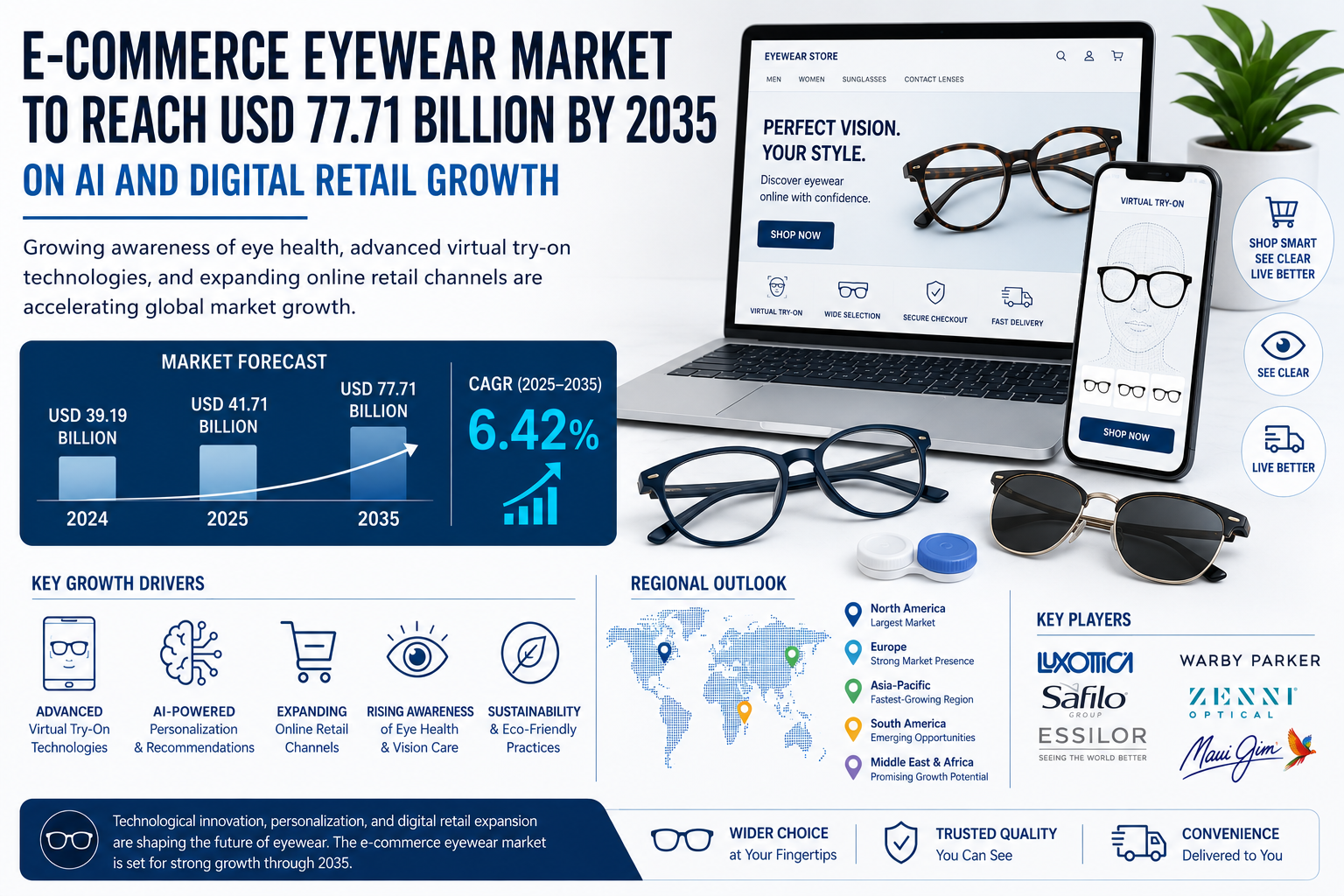
E-commerce eyewear market
Growing awareness of eye health, advanced virtual try-on technologies, and expanding online retail channels are accelerating global market growth
Advancements in virtual try-on technology, AI-driven personalization, and growing eye health awareness are accelerating growth across the global e-commerce eyewear market.”
NEW YORK, NY, UNITED STATES, June 26, 2026 /EINPresswire.com/ -- The global E-Commerce Eyewear Market is expected to witness strong expansion over the next decade as consumers increasingly turn to online platforms for prescription glasses, sunglasses, contact lenses, and specialty eyewear products. According to the latest research published by Market Research Future, the market is projected to rise from USD 41.71 billion in 2025 to USD 77.71 billion by 2035, reflecting a compound annual growth rate (CAGR) of 6.42% during the forecast period.— Market Research Future (MRFR)
The market was valued at USD 39.19 billion in 2024 and continues to benefit from the rapid digitalization of retail, rising consumer confidence in online shopping, advancements in virtual eyewear fitting technologies, and growing awareness of vision care. As eyewear increasingly serves both functional and fashion purposes, online retailers are broadening their product portfolios and investing in more personalized customer experiences.
The growing penetration of smartphones, internet connectivity, and digital payment systems has further transformed the eyewear purchasing journey, allowing consumers to compare products, access prescription services, and complete purchases from virtually anywhere.
Digital Transformation Revolutionizing Eyewear Retail
The eyewear industry is undergoing a major shift as e-commerce platforms reshape traditional retail models. In the past, consumers relied heavily on physical optical stores because eyewear purchases often required fittings, consultations, and prescription verification.
Today, online shopping has made eyewear more accessible and convenient than ever. Consumers can browse large product catalogs, compare prices, upload prescriptions, and use virtual fitting tools without visiting a store.
This convenience is especially attractive to younger consumers and digitally savvy shoppers who value speed, flexibility, and personalization. As a result, online eyewear retailers are steadily gaining share from brick-and-mortar channels.
Industry observers expect digital transformation to continue influencing consumer behavior and supporting market growth throughout the forecast period.
Growing Awareness of Eye Health Supporting Market Expansion
One of the strongest drivers of market growth is the rising global awareness of eye health and vision care.
Increasing screen time from smartphones, tablets, computers, and digital entertainment has heightened concerns about eye strain, vision deterioration, and long-term ocular health. Consumers are becoming more proactive about regular eye examinations and corrective eyewear adoption.
At the same time, aging populations in many regions are contributing to higher demand for prescription eyewear. Age-related conditions such as presbyopia, cataracts, and refractive errors are increasing the need for corrective lenses and specialized eyewear solutions.
Public health campaigns, educational initiatives, and broader access to vision care information are also encouraging consumers to prioritize eye health, creating favorable conditions for continued market expansion.
Get Full PDF Sample Copy of Report: (Including Full TOC, List of Tables & Figures, Chart) @ https://www.marketresearchfuture.com/sample_request/36611
Technological Integration Enhancing Customer Experience
Technology has become a key differentiator in the E-Commerce Eyewear Market. Retailers are investing in digital solutions designed to replicate and improve the in-store shopping experience, supporting the market’s projected rise from USD 39.19 billion in 2024 to USD 41.71 billion in 2025 and USD 77.71 billion by 2035.
Virtual try-on tools powered by augmented reality allow consumers to see how frames will look on their faces before making a purchase. These tools reduce uncertainty, improve confidence, and can help lower return rates while increasing conversion potential.
Artificial intelligence is also playing a growing role. AI-powered recommendation engines analyze facial features, style preferences, prescription needs, and purchasing behavior to deliver personalized product suggestions. In many cases, these systems help shoppers narrow thousands of frame combinations to a more manageable selection in just a few clicks.
Machine learning algorithms are helping retailers optimize inventory, forecast demand, and improve marketing precision. By analyzing browsing patterns, seasonal shifts, and purchase histories, companies can better align stock levels with consumer demand and reduce inefficiencies.
In addition, digital measurement tools, online prescription upload systems, and remote consultation features are making the eyewear buying process more seamless. As these technologies continue to evolve, customer engagement and satisfaction are expected to improve further, accelerating adoption across the market.
Personalization and Customization Emerging as Key Trends
Modern consumers increasingly seek products that reflect their individual preferences and lifestyles. This trend is especially visible in eyewear, where fashion, functionality, and personal identity often overlap. Surveys across online retail categories consistently show that consumers are more likely to purchase when they can personalize attributes such as frame shape, lens type, and color.
Online retailers are responding with extensive customization options, including frame styles, colors, lens coatings, prescription specifications, and specialized features. Many platforms now allow users to filter products by face shape, material, bridge fit, and lifestyle use cases such as work, sports, or travel.
Consumers can now design eyewear products tailored to their unique needs and aesthetic preferences. Personalized shopping experiences not only improve customer satisfaction but also strengthen brand loyalty and repeat purchasing behavior. This is particularly important in a market where repeat purchases are common for prescription updates, lens replacements, and seasonal style changes.
Customization capabilities are expected to become even more advanced as digital technologies enable greater flexibility in product design and manufacturing. As online eyewear platforms continue to integrate data-driven personalization tools, the segment is likely to attract a larger share of digitally engaged consumers.
Sustainability Influencing Consumer Purchasing Decisions
Sustainability has become an increasingly important factor for both consumers and eyewear manufacturers. Across retail categories, environmentally conscious buyers are paying closer attention to product origin, packaging, shipping methods, and recyclability.
Consumers are actively seeking products made from recycled materials, biodegradable components, and responsibly sourced resources. In response, many eyewear brands are incorporating sustainable practices into product development and supply chain operations. Some manufacturers are introducing frames made from recycled acetate, plant-based polymers, and lightweight metals designed for longer product life cycles.
Online retailers are also highlighting eco-friendly product lines, carbon-neutral shipping options, and sustainable packaging initiatives to attract environmentally aware customers. These efforts are becoming more important as consumers compare brands not only on price and style, but also on environmental responsibility.
The growing emphasis on sustainability reflects broader expectations around corporate responsibility and environmental stewardship. Companies that successfully integrate sustainable practices into their business models may gain a competitive advantage, particularly among younger consumers who are more likely to prioritize ethical purchasing decisions.
Eyeglasses Segment Continues to Lead Market Demand
Among product categories, eyeglasses continue to account for a significant share of overall market revenue. This segment remains the backbone of the E-Commerce Eyewear Market due to the high prevalence of vision correction needs across all age groups.
The increasing incidence of refractive errors, rising demand for fashion-forward frames, and growing awareness of vision correction solutions are contributing to strong demand within this segment. The global rise in screen exposure has also increased consumer interest in blue-light filtering lenses and computer glasses, further supporting category growth.
Consumers increasingly view eyeglasses as both functional medical devices and fashion accessories. This dual role has encouraged manufacturers and retailers to expand design options, offering styles that appeal to a wide range of demographic groups. From minimalist metal frames to bold acetate designs, the market now serves diverse style preferences and professional settings.
The availability of affordable prescription eyewear through online channels has further strengthened adoption among price-sensitive consumers. Competitive pricing, bundled lens options, and promotional discounts continue to make online eyeglasses an attractive alternative to traditional optical stores.
Sunglasses Segment Benefits from Fashion and Protection Trends
Sunglasses represent another important segment within the E-Commerce Eyewear Market. Demand in this category is supported by both functional and lifestyle-driven purchasing behavior.
Growing awareness of ultraviolet (UV) protection and increasing interest in fashion accessories are supporting strong demand for sunglasses across global markets. Consumers are increasingly seeking products that combine aesthetic appeal with protective functionality, particularly in regions with high sun exposure and active outdoor lifestyles.
Premium brands, designer collaborations, and influencer-driven marketing campaigns continue to stimulate consumer interest. Seasonal demand patterns, travel activity, outdoor recreation, and lifestyle trends also contribute to growth within the sunglasses category. In many markets, sunglasses purchases rise during summer months and holiday travel periods, creating predictable sales opportunities for online retailers.
As fashion-conscious consumers continue to embrace online shopping, retailers are expected to expand their sunglasses offerings and marketing efforts. The segment is also benefiting from the growing popularity of polarized lenses, mirrored coatings, and sport-specific designs.
Contact Lens Adoption Continues to Increase
The contact lens segment is experiencing steady growth due to advancements in lens technology, increasing comfort levels, and broader product availability. This category continues to gain traction among consumers seeking convenience, discretion, and flexibility in vision correction.
Consumers who prefer alternatives to traditional eyeglasses often choose contact lenses for their convenience and aesthetic advantages. Daily disposable lenses, silicone hydrogel materials, and specialty lens designs have improved user experiences significantly. These innovations have helped reduce dryness, improve oxygen permeability, and support longer wear comfort.
E-commerce platforms offer subscription services and automated replenishment programs that simplify purchasing and encourage recurring revenue streams. These models are particularly effective for contact lens users, who often require regular refills and value the convenience of scheduled deliveries.
The convenience of home delivery combined with competitive pricing continues to make online channels attractive for contact lens consumers. As tele-optometry and digital prescription verification become more widely accepted, online contact lens sales are expected to expand further.
Material Innovations Supporting Product Development
Material innovation remains a critical driver of competitiveness within the eyewear industry. Product performance, comfort, durability, and aesthetics are all influenced by the materials used in frames and lenses.
Plastic frames continue to dominate due to their affordability, lightweight construction, and design versatility. Metal frames remain popular among consumers seeking durability and premium aesthetics. Both categories are widely available across online channels, allowing retailers to serve budget-conscious and premium buyers alike.
Polycarbonate materials are increasingly favored for safety glasses and sports eyewear because of their impact resistance and lightweight characteristics. These materials are also commonly used in children’s eyewear and active-lifestyle products where durability is essential.
Glass lenses maintain demand among certain consumer segments that prioritize optical clarity and scratch resistance. Although less common than lightweight alternatives, glass remains relevant in premium and specialty applications.
Manufacturers continue to invest in research and development to improve material performance, comfort, durability, and sustainability. As innovation accelerates, material selection is becoming a key differentiator in product positioning and consumer appeal.
Prescription Eyewear Segment Remains a Core Revenue Generator
Prescription eyewear represents one of the largest and most stable segments within the market. Demand is supported by the widespread prevalence of myopia, hyperopia, astigmatism, and age-related vision changes.
Single vision lenses account for a substantial portion of demand due to the prevalence of nearsightedness and farsightedness. Bifocal and progressive lenses continue to experience growth as aging populations require multifocal vision correction solutions. This trend is particularly relevant in developed markets where the proportion of older adults is increasing steadily.
The growing acceptance of online prescription fulfillment is expected to support long-term market expansion. As consumers become more comfortable uploading prescriptions and using remote fitting tools, prescription eyewear sales through digital channels are likely to continue rising.
Online Retail Channels Driving Market Accessibility
Online retail remains the dominant distribution channel within the market. The convenience, variety, and price transparency offered by digital platforms have made them central to the growth of e-commerce eyewear.
Dedicated eyewear e-commerce websites provide extensive product selections, virtual consultation tools, customer reviews, and competitive pricing. These features enable consumers to make informed purchasing decisions while enjoying the convenience of home delivery. Many platforms also offer free shipping, easy returns, and satisfaction guarantees to reduce purchase hesitation.
Direct sales channels are also expanding as manufacturers seek stronger relationships with end consumers and greater control over brand experiences. By selling directly through branded websites, companies can improve margins, collect customer data, and deliver more personalized service.
Third-party e-commerce platforms continue to play an important role by providing broad market reach and access to diverse customer segments. The coexistence of multiple digital sales channels is creating a highly competitive environment that benefits consumers through improved service quality and product availability.
Social Media Marketing Accelerating Consumer Engagement
Social media has become a powerful force shaping purchasing decisions within the eyewear industry. Visual-first platforms are especially effective for showcasing eyewear products, which often rely on style, fit, and appearance to drive sales.
Platforms such as Instagram, TikTok, Facebook, and YouTube allow brands to showcase products, collaborate with influencers, and engage directly with consumers. These channels are particularly valuable for reaching younger demographics, who often discover new eyewear brands through short-form video content and creator recommendations.
Influencer partnerships, user-generated content, and targeted advertising campaigns are helping brands reach highly specific audience segments and improve conversion rates. As social commerce continues to evolve, social media is expected to play an increasingly important role in market growth.
Regional Outlook
North America remains one of the largest regional markets due to high internet penetration, strong consumer purchasing power, advanced healthcare infrastructure, and widespread adoption of digital retail solutions. The United States continues to lead regional demand, supported by high awareness of vision care and strong consumer acceptance of online eyewear purchasing. The region also benefits from a mature e-commerce ecosystem and strong adoption of virtual try-on technologies.
Europe maintains a significant market position driven by growing demand for premium eyewear products, increasing adoption of e-commerce platforms, and a strong emphasis on eye health. Countries such as Germany, the United Kingdom, France, and Italy continue to contribute substantially to regional growth. Consumers in Europe are also showing increasing interest in sustainable and design-led eyewear products.
Asia-Pacific is expected to emerge as the fastest-growing region during the forecast period. Rising disposable incomes, expanding middle-class populations, increasing internet access, and growing awareness of vision correction solutions are creating substantial opportunities across China, India, Japan, South Korea, and Southeast Asia. Rapid urbanization and mobile-first shopping behavior are further accelerating online eyewear adoption in the region.
Competitive Landscape
The E-Commerce Eyewear Market features intense competition among established global manufacturers, digital-first retailers, and emerging online brands.
Key market participants include:
• Luxottica
• Safilo Group
• Essilor
• Warby Parker
• Zenni Optical
• Maui Jim
Companies are investing heavily in digital innovation, artificial intelligence, virtual try-on technologies, sustainable product development, and customer experience enhancements to strengthen their competitive positions.
Strategic partnerships, acquisitions, product launches, and omnichannel retail strategies remain important growth initiatives across the industry.
Future Outlook
The future of the E-Commerce Eyewear Market remains highly promising as technological innovation, consumer awareness, and digital commerce adoption continue to accelerate worldwide.
Advancements in virtual fitting solutions, artificial intelligence, prescription verification technologies, and personalized shopping experiences are expected to transform how consumers purchase eyewear products.
As online shopping becomes increasingly integrated into everyday life, the e-commerce eyewear sector is expected to remain a dynamic and rapidly evolving segment of the global retail industry.
Discover Related Research Reports By Market Research Future:
Body Care Product Market https://www.marketresearchfuture.com/reports/body-care-product-market-41452
Fiberglass Product Market https://www.marketresearchfuture.com/reports/fiberglass-product-market-39877
Workwear Market https://www.marketresearchfuture.com/reports/workwear-market-26851
Sagar Kadam
Market Research Future
+ +1 628-258-0071
email us here
Visit us on social media:
LinkedIn
Facebook
YouTube
X
Legal Disclaimer:
EIN Presswire provides this news content "as is" without warranty of any kind. We do not accept any responsibility or liability for the accuracy, content, images, videos, licenses, completeness, legality, or reliability of the information contained in this article. If you have any complaints or copyright issues related to this article, kindly contact the author above.
