

Vacuum Insulated Glass Gains Attention as an Alternative to Conventional Glazing Systems

In recent years, increased focus on energy conservation and retrofit efficiency has led to growing industry attention toward alternative glazing technologies, including Vacuum Insulated Glass (VIG).
Limitations of Conventional Glazing Systems
Traditional insulated glazing systems typically improve thermal performance by increasing the number of glass panes and incorporating gas-filled cavities. While this method enhances insulation, it also results in increased overall thickness, often reaching 30–40 mm.
In retrofit and renovation contexts, thicker glazing systems may introduce practical challenges. These can include compatibility issues with existing window frames, increased structural load, and more complex installation requirements. Such constraints may affect feasibility in certain building upgrade scenarios.
Vacuum Insulated Glass as an Emerging Approach
Vacuum Insulated Glass is designed with a vacuum cavity between two panes of glass, replacing the gas-filled space found in conventional insulated glazing. By minimizing the presence of air or gas, this structure reduces heat transfer through conduction and convection.
This configuration enables comparable thermal insulation performance within a significantly thinner profile compared to multi-pane glazing systems.
Structure and Technical Characteristics
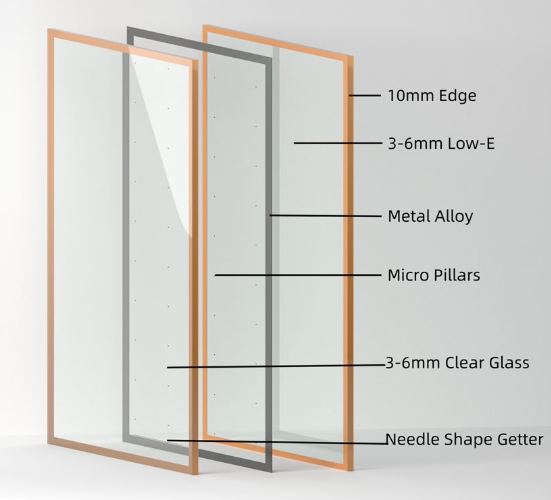
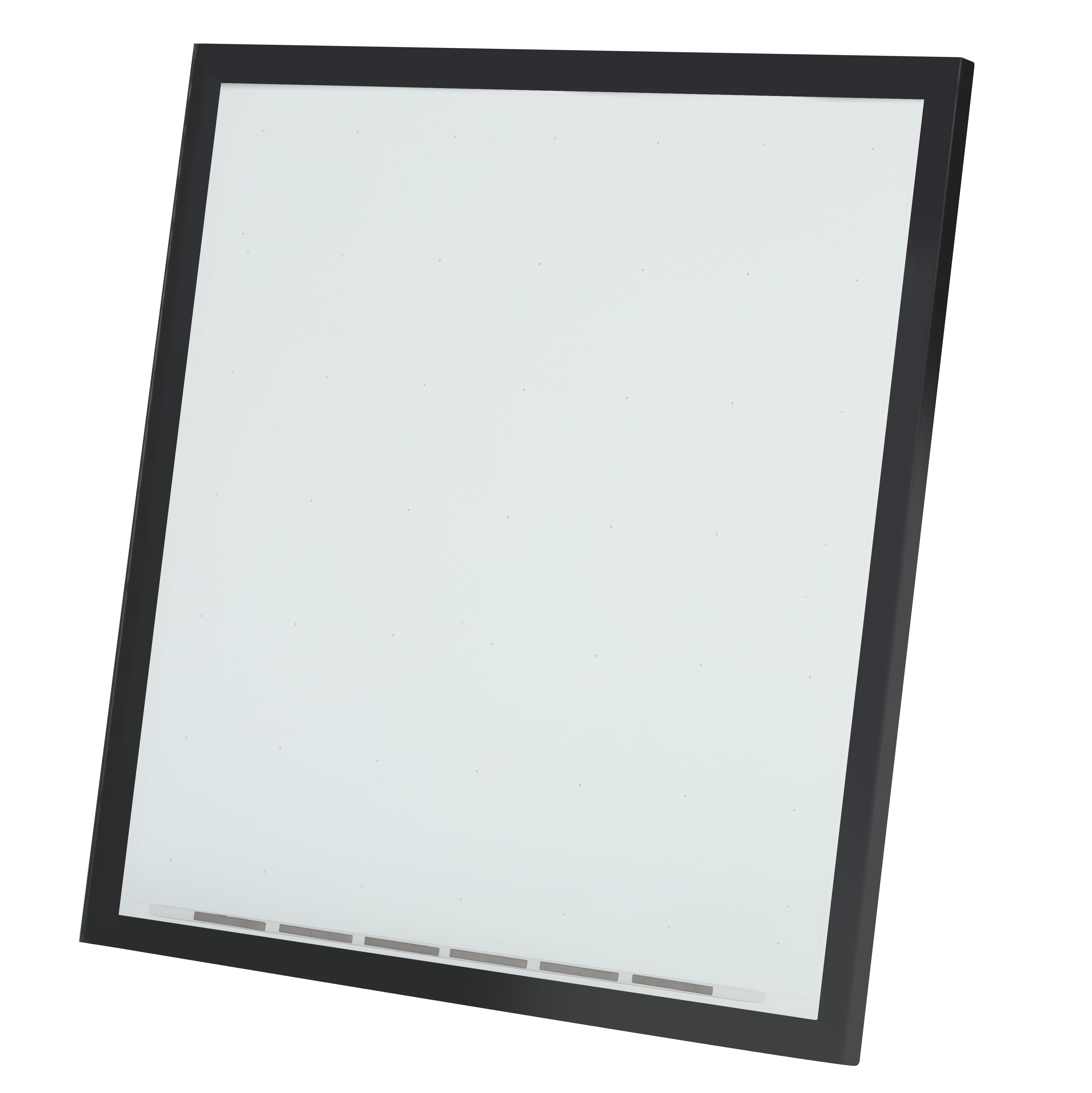
A typical VIG unit consists of two glass panes with a total thickness generally ranging from 6 mm to 12 mm. The structure commonly includes a Low-E coated glass pane and a second float glass pane, separated by a sealed vacuum cavity.
To maintain the spacing between the panes under atmospheric pressure, a micro-support pillar system is incorporated within the vacuum layer. In addition, getter materials are often included to absorb residual gases and moisture, supporting the long-term stability of the vacuum environment.
Thermal Performance Comparison
Reported thermal transmittance (U-value) ranges for common glazing systems are as follows:
Double glazing: approximately 1.1–1.4 W/m²K
Triple glazing: approximately 0.6–0.8 W/m²K
Vacuum Insulated Glass: approximately 0.4–0.7 W/m²K
These figures indicate that vacuum-based glazing systems can achieve high levels of thermal insulation while maintaining a reduced thickness.
Relevance in Retrofit Applications
Vacuum Insulated Glass is increasingly being evaluated for use in retrofit and renovation projects, where maintaining existing building structures is a key consideration.
In such applications, relevant factors typically include compatibility with existing window frames, preservation of architectural appearance, reduced need for structural modification, and improved thermal performance within limited space.
These considerations are particularly applicable in historical building upgrades and urban renovation projects, where structural constraints may limit the use of thicker glazing systems.
Industry Context and Policy Drivers
The development and adoption of advanced glazing technologies, including VIG, are being observed in the context of evolving global energy efficiency policies. These include frameworks such as the Energy Performance of Buildings Directive (EPBD) in Europe, as well as various federal and state-level energy efficiency initiatives in the United States.
Outlook
As regulatory requirements and performance expectations continue to evolve, the glazing industry is expected to explore a broader range of insulation technologies. Vacuum Insulated Glass represents one of several approaches currently under consideration for its combination of thermal performance and compact structure.
Future adoption is likely to depend on factors such as production scalability, cost considerations, long-term durability, and integration with existing building systems.
HAN XIAOQING
ShanDong HaanGlas CO.,LTD
+86 177 0546 4660
email us here
Legal Disclaimer:
EIN Presswire provides this news content "as is" without warranty of any kind. We do not accept any responsibility or liability for the accuracy, content, images, videos, licenses, completeness, legality, or reliability of the information contained in this article. If you have any complaints or copyright issues related to this article, kindly contact the author above.
