

Your daily news update on Europe
Provided by AGP
CodeLifeAI Annouces a Unified Revolutionary AI platform for DNA, Protein, Cell Design and Simulation
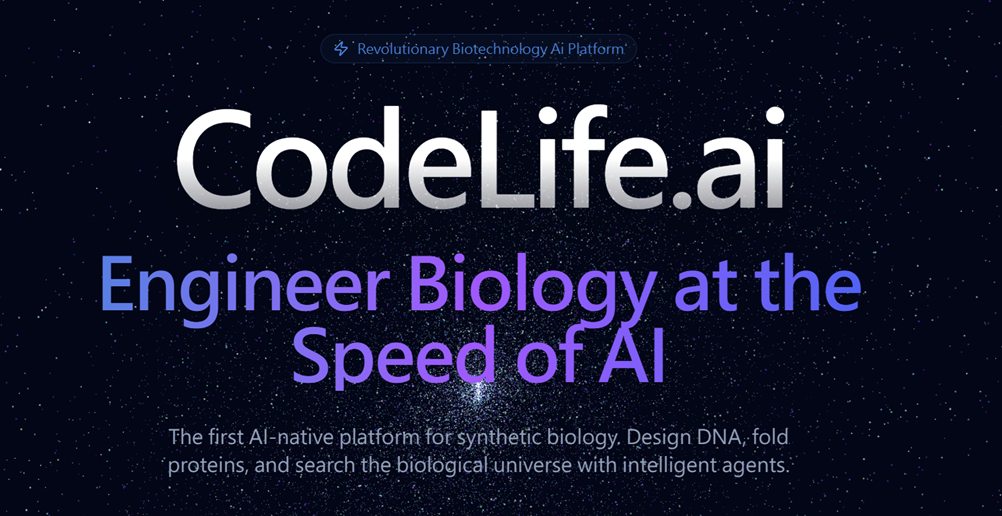
CodeLifeAI: The All-in-one AI Biotech Platform
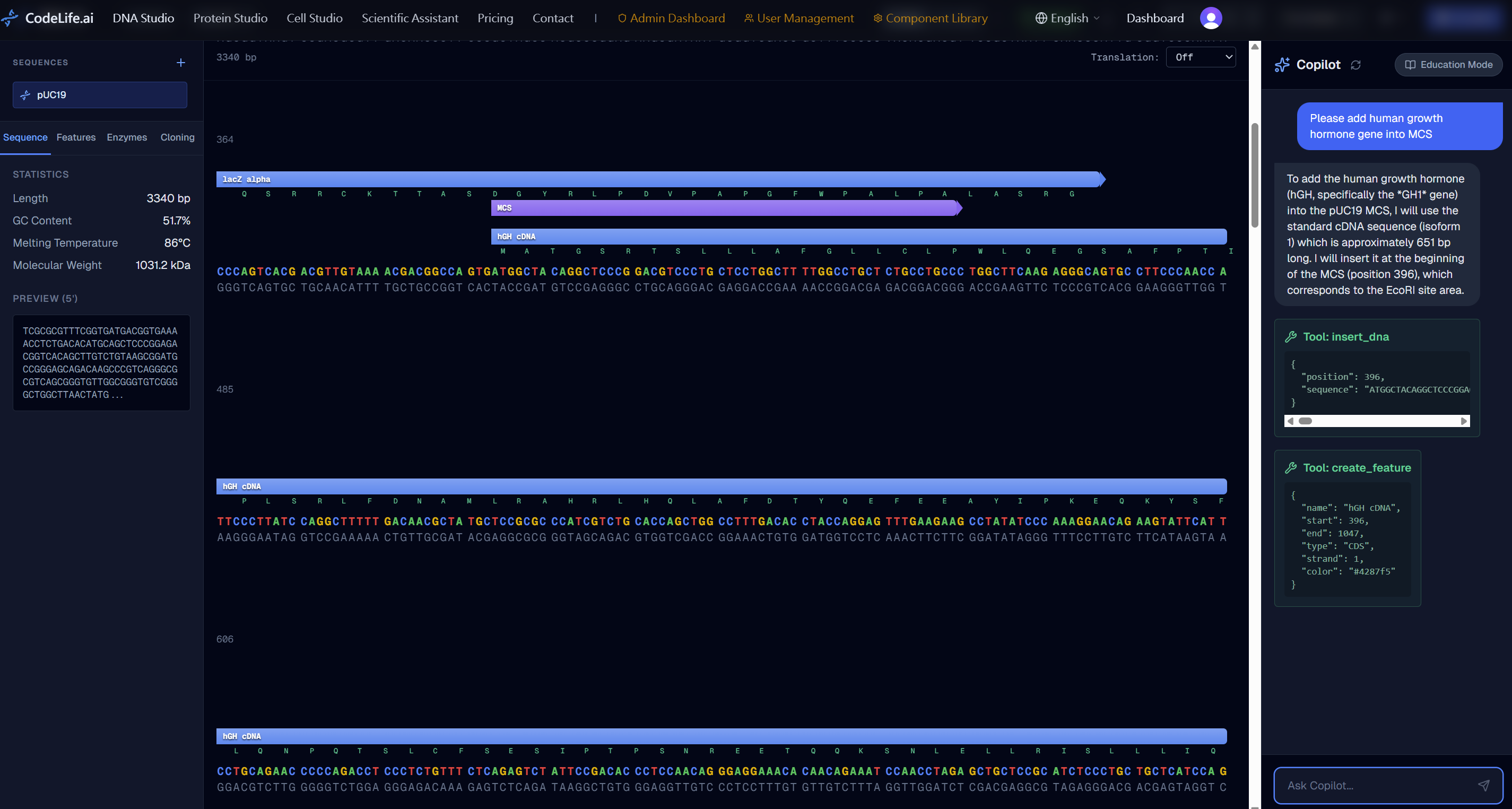
CodeLifeAI transforms DNA design into an interactive AI-native workflow, allowing users to instruct the copilot in natural language while the platform performs sequence-level edits, creates biological feature annotations, and visualizes construct architec
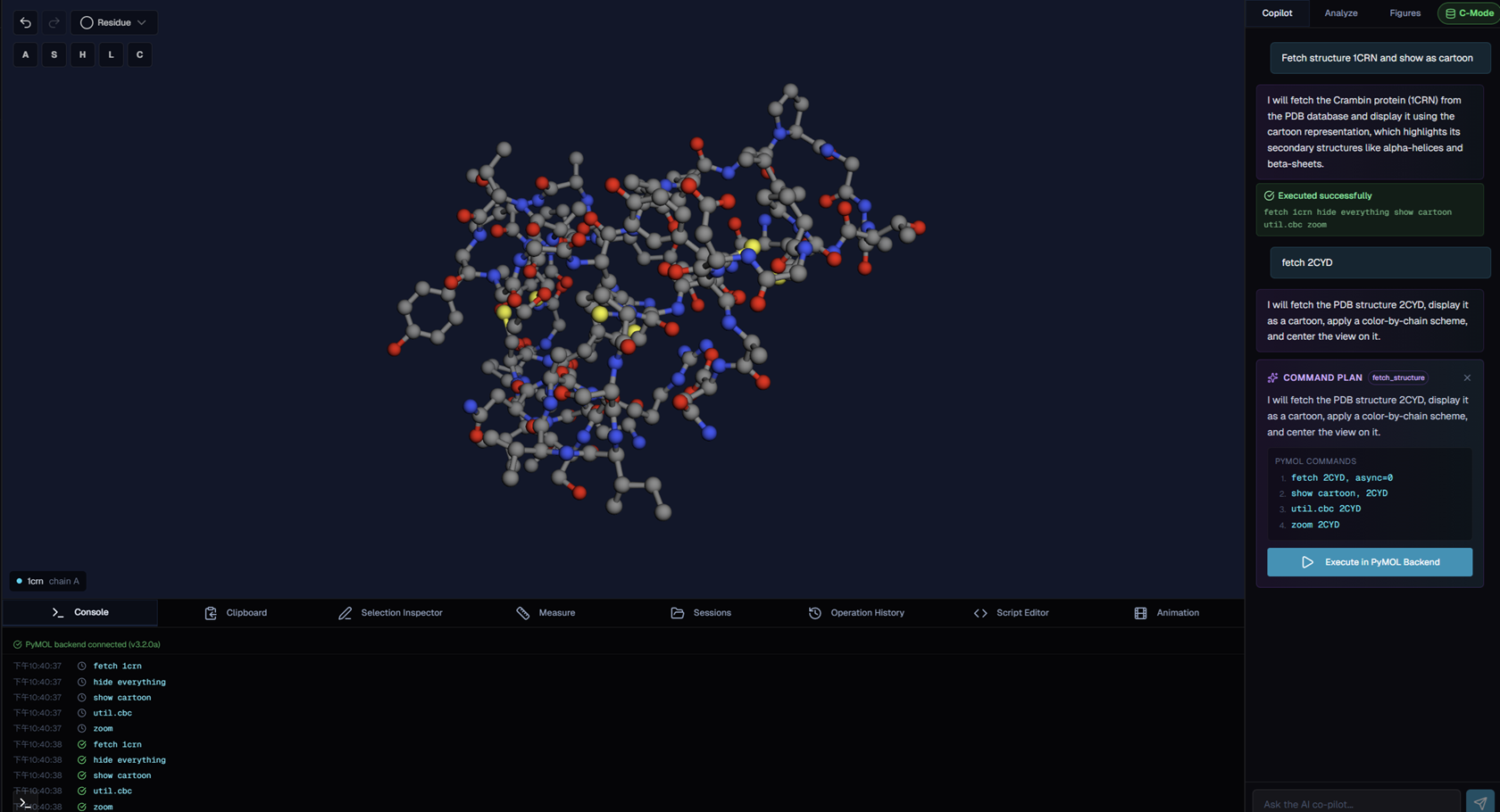
CodeLifeAI brings molecular modelling into an AI-native workspace, enabling scientists to command complex structural biology operations in natural language while the platform translates requests into executable molecular visualization workflows.
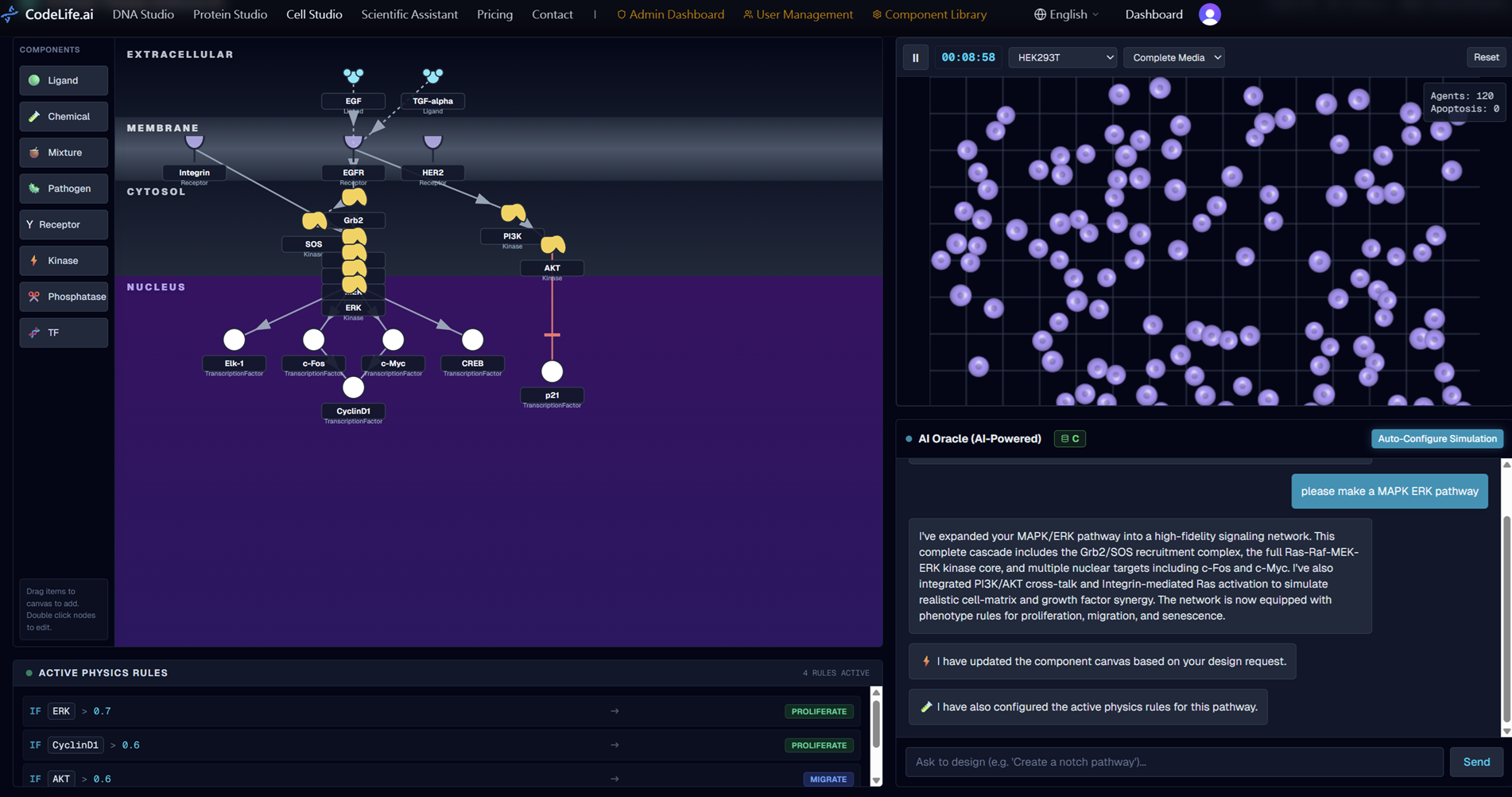
CodeLifeAI extends AI-native biotechnology beyond molecules into cellular systems, allowing researchers to generate biological signalling pathways, configure simulation rules, and observe dynamic cell-level behaviours within a unified research workspace.
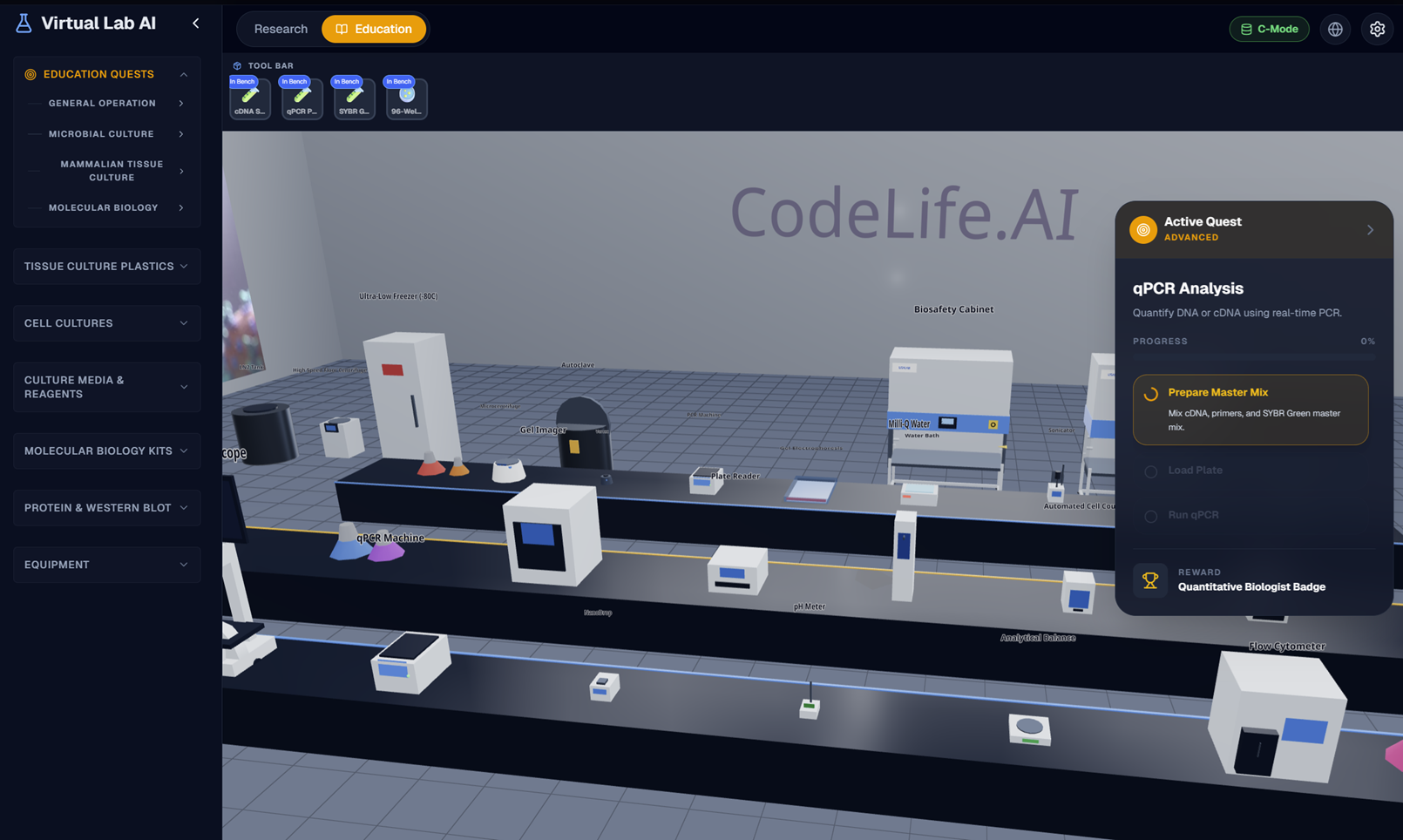
CodeLifeAI brings laboratory workflows into an AI-native 3D environment, enabling scientists and research students to rehearse experimental procedures, understand equipment usage, and connect digital biological design with practical lab execution.
Built for scientists, CodeLifeAI unifies biological design, molecular modelling, AI-assistant, and research management into one powerful intelligent environment
HONG KONG, HONG KONG, HONG KONG, May 18, 2026 /EINPresswire.com/ -- CodeLifeAI today announced the launch of a revolutionary AI-native workspace designed to redefine how biotechnology is designed, explored, and managed. Built for scientists, research students, and biotech teams operating at the frontier of modern life sciences, CodeLifeAI brings together DNA design, protein engineering, cell simulation, scientific assistance, and research management into one integrated platform.As biotechnology becomes more computational, the scientific workflow has become more fragmented. Researchers are expected to move rapidly across sequence design, protein modelling, experimental planning, scientific writing, data interpretation, lab coordination, and project organization — often while working across disconnected tools and incomplete systems. CodeLifeAI was built to eliminate that fragmentation.
Rather than serving as just another point solution, CodeLifeAI is designed as an AI-native workspace for the full biotechnology research lifecycle. It gives users a single environment where biological ideas can move from concept to design, from analysis to simulation, and from planning to execution with greater speed, clarity, and control.
CodeLifeAI was founded by Dr. Keith Kwong, a Forbes-recognized influential scientist in life science, whose work bridges biotechnology innovation, computational design, and scientific research.
“Biotechnology is entering a new era where researchers need more than isolated tools or generic AI assistants,” said Dr. Keith Kwong, founder of CodeLifeAI. “They need a powerful workspace that understands the logic of biological design and supports the full research process. CodeLifeAI was created to give scientists and research students one intelligent environment where DNA design, protein engineering, cell simulation, scientific reasoning, and lab management can work together at a level that matches the complexity of modern biotechnology.”
At the center of CodeLifeAI is a broad, integrated research environment built for serious biotechnology work. The platform is organized around core capabilities that reflect how scientific research actually happens in practice.
The DNA Design workspace supports biotechnology workflows spanning plasmid planning, construct design, CRISPR-related design, AAV vector concepts, sequence analysis, restriction mapping, and BioParts-based design. It is designed to help users move beyond static biological diagrams and engage directly with structured, computation-assisted DNA design.
The Protein Engineering workspace supports structural and sequence-level protein research, including structure prediction, sequence design, molecular visualization, and AI-assisted protein analysis. For researchers working on protein function, enzyme engineering, therapeutic design, or structural biology, this creates a more integrated path from hypothesis to computational design.
The Cell Simulation workspace gives users a way to explore cellular systems and biological behaviour through simulation-driven workflows. This helps researchers and students connect molecular design with cellular context, test ideas before the lab, and reason more deeply about how biological systems behave in practice.
The AI Scientific Assistant acts as a research companion across scientific reasoning, experimental planning, biological interpretation, and scientific communication. Rather than acting as a generic chatbot, it is designed to operate within the logic of biotechnology research, helping users think through experiments, interpret data, organize workflows, and move faster through complex scientific tasks.
The platform also includes tools for scientific research management, supporting lab workflows, research data organization, inventory concepts, and project-level scientific structure. In real research environments, scientific progress depends not only on discovery, but also on precision, coordination, and the ability to keep complex work under control. CodeLifeAI is built for that reality.
CodeLifeAI’s broader vision is to become the AI-native operating environment for biotechnology research. Just as modern AI coding tools have transformed how software is built, CodeLifeAI aims to transform how biological research feels — more integrated, more intelligent, more visual, and more actionable.
The platform is particularly relevant for:
- synthetic biology researchers
- protein engineering teams
- academic laboratories
- biotech startups
- university research groups
- advanced research students
- scientific teams building computationally enabled R&D workflows
CodeLifeAI is designed not only for experienced scientists, but also for ambitious research students who want to work with real biotechnology workflows in a more structured, powerful environment. By reducing friction across design, analysis, simulation, and research management, the platform supports both scientific depth and learning momentum.
“Modern biotechnology is too complex to be trapped in disconnected silos,” added Dr. Kwong. “A researcher may need to design a construct, inspect a protein, interpret a biological system, document the workflow, and manage project data — all in the same day. CodeLifeAI was built to bring those tasks under one roof. Our ambition is to set a new standard for what AI-native biotech research can look like.”
With this launch, CodeLifeAI is inviting scientists, research students, university laboratories, biotech startups, and institutional partners to explore the platform, request demonstrations, and discuss early collaboration opportunities. The company believes the next generation of biotechnology will belong to teams that can move seamlessly between biology, computation, and AI — and CodeLifeAI is built for exactly that future.
For more information, visit https://www.codelife.ai
CodeLifeAi
Solar Trinity Science Limited
sales@codelife.ai
CodeLifeAI: Revolutionary AI platform for DNA Protein Engineering Cell Simulation Platform
Legal Disclaimer:
EIN Presswire provides this news content "as is" without warranty of any kind. We do not accept any responsibility or liability for the accuracy, content, images, videos, licenses, completeness, legality, or reliability of the information contained in this article. If you have any complaints or copyright issues related to this article, kindly contact the author above.
